Authorized TideRider dealer
TideRider Drive-On Floating Boat Lift for Docking | Up to 35,000 LB Capacity
TideRider Drive-On Floating Boat Lift for Docking | Up to 35,000 LB Capacity

TideRider Floating Boat Lift
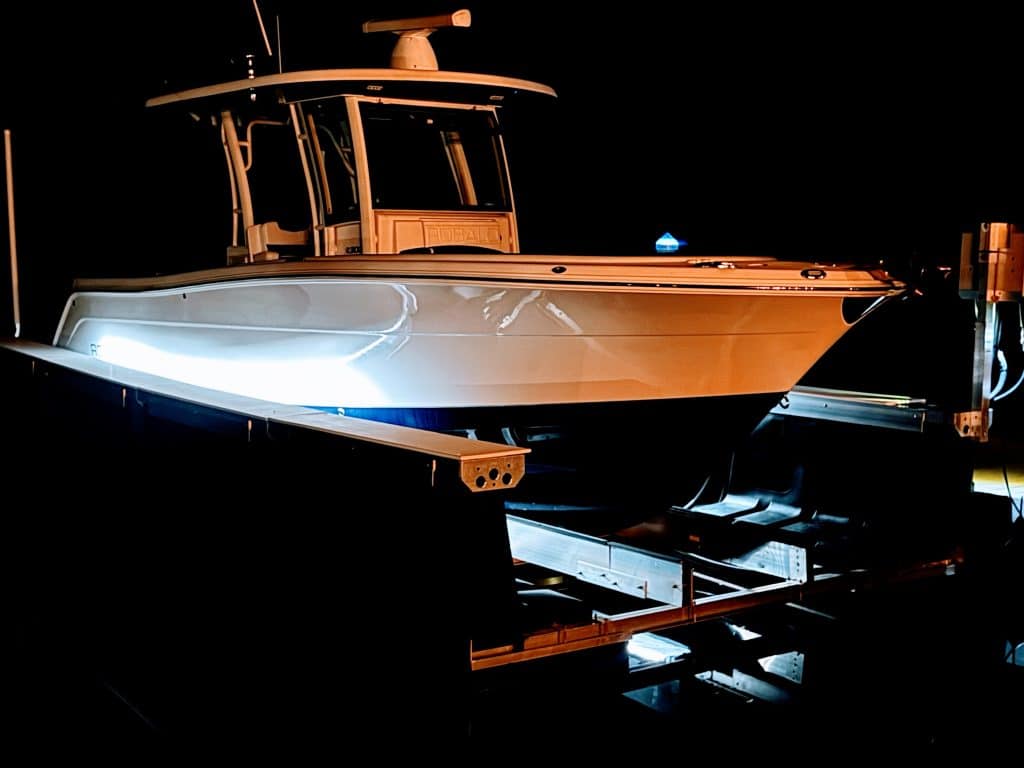
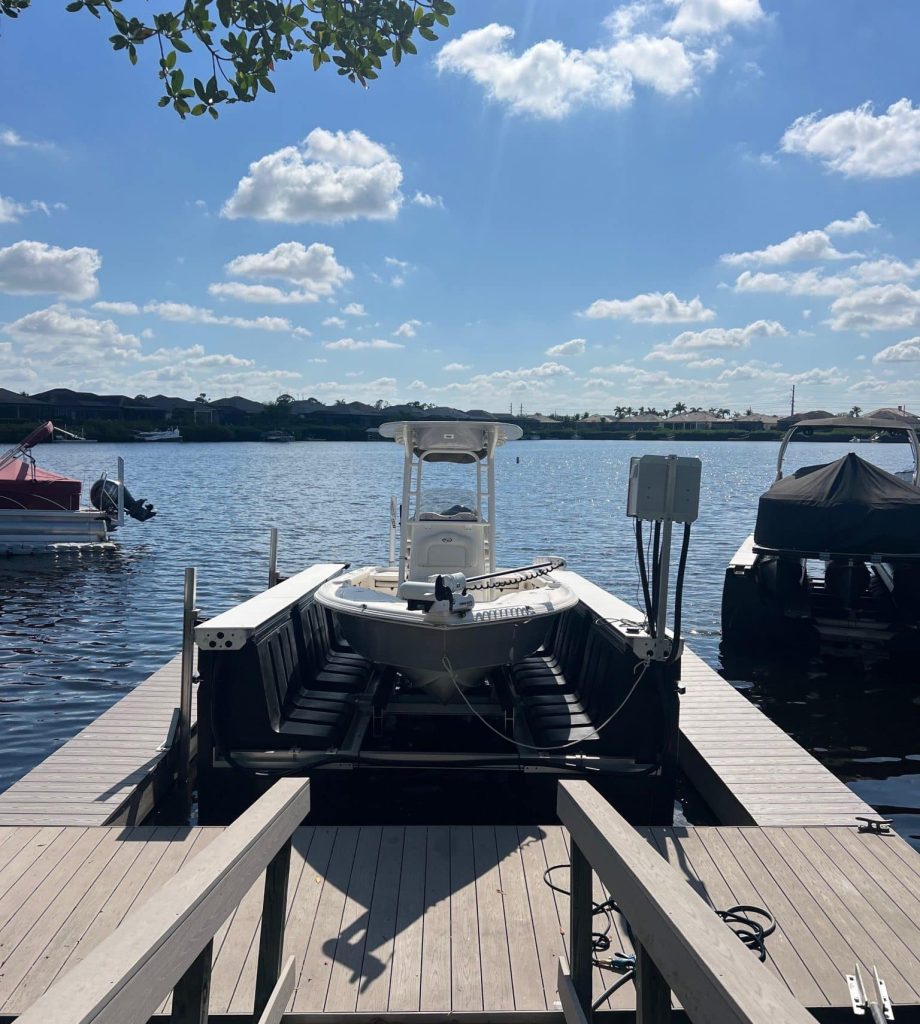
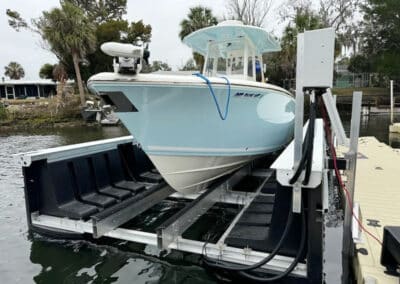
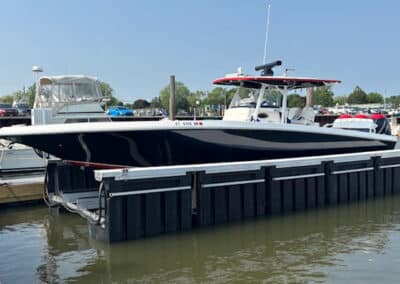
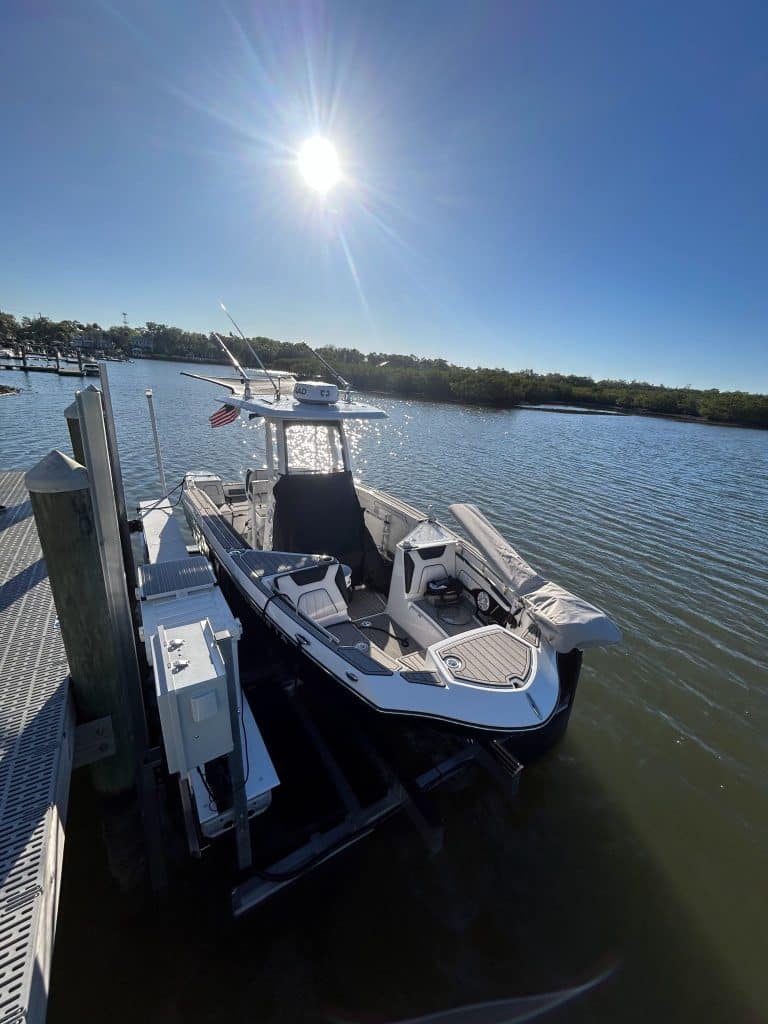
The TideRider floating boat lift is a drive-on docking solution built for waterfront properties dealing with tides, storm surge, and water levels that never sit still. Instead of fighting the water with fixed pilings and overhead cable systems, TideRider floats on low-profile tanks and rises and falls with the water itself, so your boat stays high, dry, and level no matter what the tide chart says. Full-length walkways run along the entire perimeter of the lift, providing safe footing for boarding, cleaning, and servicing your boat from any side.
Tidewater Boat Lifts is the local, authorized TideRider dealer for the region, matching lift capacity, bunking, and mooring to your specific dock and water conditions, then handling the install and a dockside walkthrough so the lift is ready to use from day one.
TideRider Lift Specifications

Service Areas
Tidewater Boat Lifts installs and services TideRider floating lifts on docks throughout coastal Georgia, North Florida and Caribbean, including tidal rivers, creeks, marinas, and lakefront properties.
Compatible Boats
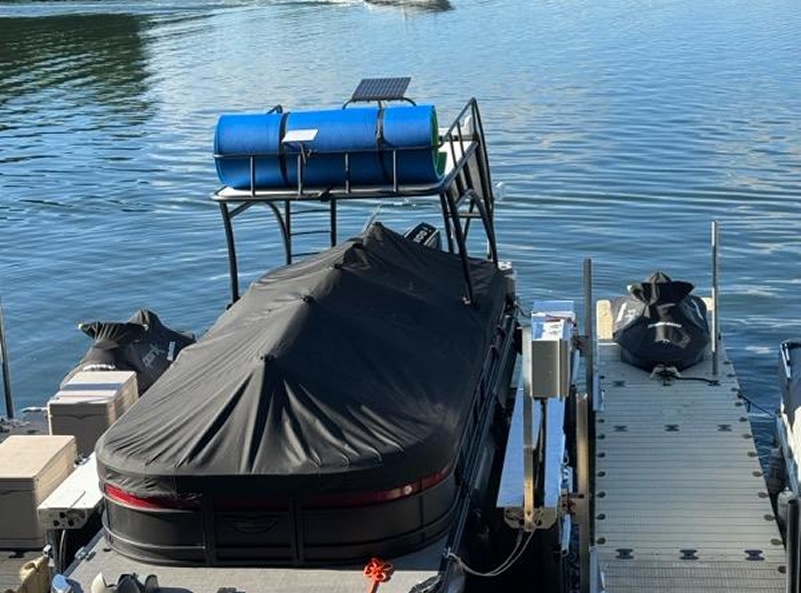
TideRider floating lifts are built to handle center consoles, bay boats, pontoons, tritoons, ski boats, sailboats, and personal watercraft. Adjustable bunks and cradles support everything from shallow-draft skiffs to deep-V hulls, with capacities from about 6,000 to 35,000 lbs, site-verified.

Power
Each lift runs on standard 120 V power, with options for a generator, inverter, shore power, or solar for docks without easy access to electricity. Local control is standard, with optional app and smartwatch control available.

Average Water Depth
Most installations need roughly 30 inches of water plus your boat’s draft. Because depth and bottom conditions vary by site, Tidewater Boat Lifts confirms your exact requirements during a dockside review before finalizing lift sizing.
Benefits of a Floating Boat Lift on Tidal and Fluctuating Water
Traditional cable and piling lifts are built to work at a single, fixed water level, which makes them a poor fit for tidal rivers, creeks, and lakes that rise and fall throughout the year. A TideRider floating lift is designed around that movement instead of around a single water line, which is why it holds up on the shifting waterways of Georgia, North Florida and Caribbean.
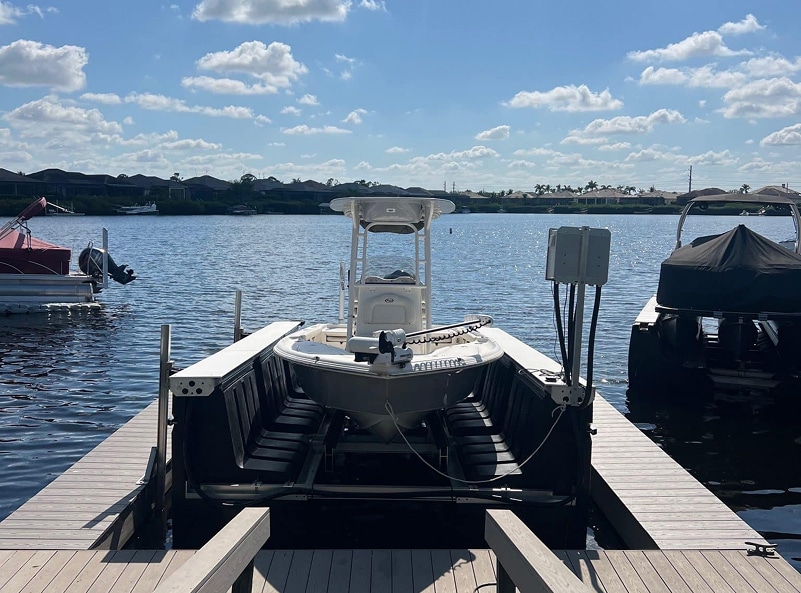
Benefits waterfront owners see after switching to a floating lift:
Works with fluctuating water
The lift floats with the water level instead of fighting it, which is a major advantage on tidal creeks, rivers, and lakes where water levels change daily or seasonally.
Less structure and permitting
Floating lifts typically require less heavy structure than traditional cable lifts, which can mean a simpler permitting process and less impact to your existing dock.
Adaptable and relocatable
Lift capacity and bunking can be adjusted as your boats change, and the entire unit can be towed behind a vessel or moved by trailer if you relocate.
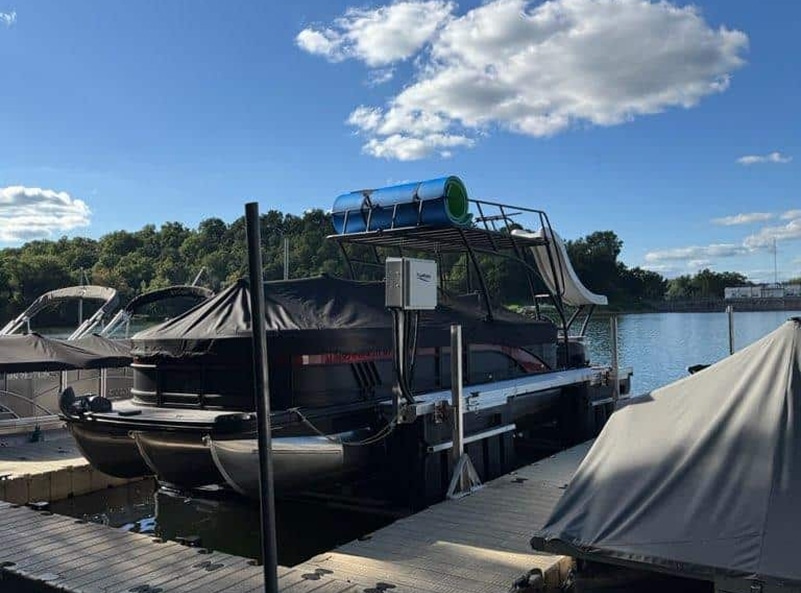
Full-length walkways
Walk the entire length of the boat for boarding, cleaning, and service, without stepping over beams or squeezing between tight posts.
Low-profile views
Low-profile tanks sit close to the water, so there are no tall frames or gantries blocking your view of the water and horizon.
Local site review included
Tidewater Boat Lifts evaluates your dock, water depth, and exposure before installation, then matches lift, capacity, and controls to your specific application.
Floating Boat Lift Key Features
Every TideRider lift installed by Tidewater Boat Lifts is built from the same core set of features, then configured to your boat and dock. The result is a lift that is simple to operate day to day and durable enough to handle coastal exposure year-round.

One-button operation
Raise and lower the lift with a single button, with an optional remote for hands-free control from the dock.

Full-length walkways
360-degree access around the entire lift makes boarding, cleaning, and routine service easier and safer.

Auto-leveling support
Balanced cradles automatically adjust to keep skiffs, deep-V hulls, and pontoons level and stable as they load.

Low-profile design
No large pilings or overhead structure to block sightlines, so your water view stays open.
Coastal-grade materials
A marine-grade aluminum frame, stainless hardware, and brass nuts are built to withstand saltwater and coastal weather.

Light maintenance
Minimal routine upkeep season after season means more time on the water and less time on lift maintenance.
Smart Floating Boat Lift Technology and Specs
Beyond the mechanical lift itself, TideRider offers a smart control system that lets you manage your lift remotely and prepare it ahead of changing weather. Controls work from the dock, the driveway, or on the way to the marina, giving you real-time status and one-tap actions from your phone, watch, or handheld remote.
Mobile and watch control
Operate the lift from iOS, Android, and popular smartwatches, with quick status checks and one-tap actions.
Auto-leveling intelligence
The system balances support across skiffs, deep-V hulls, and pontoons automatically as loads shift.
Alerts and access control
Optional notifications, PIN access, and remote pairing or revocation help you manage who can operate the lift.

Schedules and scenes
Set up presets such as Pre-Arrival, Night Secure, or Maintenance for repeatable, one-tap operation.
Storm prep mode
Guided steps and reminders walk you through securing the lift before severe weather arrives.
Activity log
Review a history of when and how the lift was used, useful for shared docks or multiple boats.
Smart Specs

Capacities
Typical 6,000 to 35,000 lb, site-verified

Typical water needed
About 30 inches plus your boat’s draft

Power
120V; options for generator, inverter, or solar plus inverter

Connectivity
Local control; optional app and watch control

Storm readiness
Floating design can ride surge when properly prepared
Features and options vary by configuration and site conditions
Floating Boat Lift Gallery



Floating Boat Lift FAQs
A floating boat lift uses buoyant tanks instead of fixed pilings or overhead cables to raise and lower your boat. Because it floats, it rises and falls naturally with the water level rather than sitting at one fixed height, making it well suited to tidal rivers, creeks, and lakes with fluctuating water.
Choose a floating lift if your water level changes significantly due to tides, rainfall, or storm surge, since it moves with the water instead of needing a fixed setpoint. It also requires less structure and often a simpler permitting process. A standing lift may still work if your water depth stays fairly constant year-round.
Floating lifts keep your hull, running gear, and finish out of the water, protecting against marine growth and corrosion while supporting resale value. Full-length walkways make boarding and cleaning easier and safer, and the low-profile design keeps water views open.
TideRider lifts support center consoles, bay boats, pontoons, tritoons, ski boats, sailboats, and PWCs, with adjustable bunks for different hull shapes. Most fixed and floating docks can be adapted, but the right configuration depends on your dock structure, water depth, and exposure—confirmed during a local site review.
Most installations need roughly 30 inches of water plus your boat’s draft, though this varies by lift capacity and site conditions. Tidewater Boat Lifts confirms your exact depth requirements during a dockside review before finalizing lift sizing.