
TideRider Floating Boat Lift
Why Floating Boat Lifts Work on Tidal Water
A floating boat lift for tidal water is designed around changing water levels instead of one fixed water line. TideRider floats with the water, making it well suited to rivers, creeks, lakes, and other waterways throughout Georgia, North Florida and Caribbean.
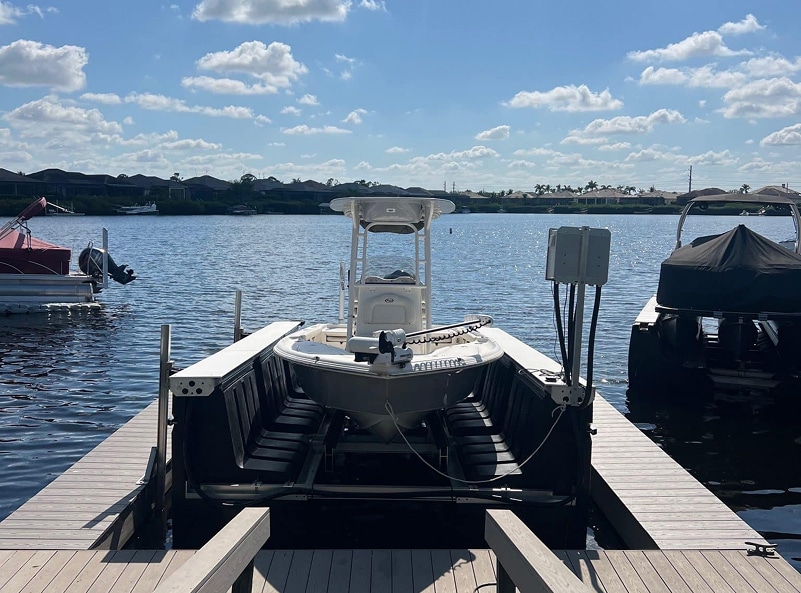
Built for Water That Never Stays Still
Traditional cable and piling lifts are built to work at a single, fixed water level, which makes them a poor fit for tidal rivers, creeks, and lakes that rise and fall throughout the year.
A TideRider floating lift is designed around that movement instead of around a single water line. The lift floats with the water level rather than fighting it, which is a major advantage on waterways where levels change daily or seasonally.
Because the lift rises and falls with the water itself, your boat can remain supported as the surrounding water level changes.
Why a Floating Boat Lift Works Here
Designed for waterways including rivers, creeks, and lakes in Georgia, North Florida and Caribbean.

Works with fluctuating water
The lift floats with the water level instead of fighting it. This is a major advantage on creeks, rivers and lakes with fluctuating water.
Less structure and permitting
Floating lifts often require less heavy structure than traditional cable lifts. That can mean less permitting and less impact to your dock.
Adaptable and relocatable
Lift capacity and bunking can be adjusted as your boats change. If you want to move the lift, it can be towed behind a vessel or put on a trailer.
Local site review
Tidewater looks at your dock, water depth, and exposure, then matches the lift, capacity, and controls to your application.

Designed Around Changing Water Levels
Fixed lift systems work around a single water level. A floating lift works differently by moving with the surrounding water.
This makes the floating design especially useful on tidal creeks, rivers, and lakes where water conditions can change throughout the day or across the season.
Low-profile tanks sit close to the water, helping keep views open without large overhead frames or gantries blocking the horizon.
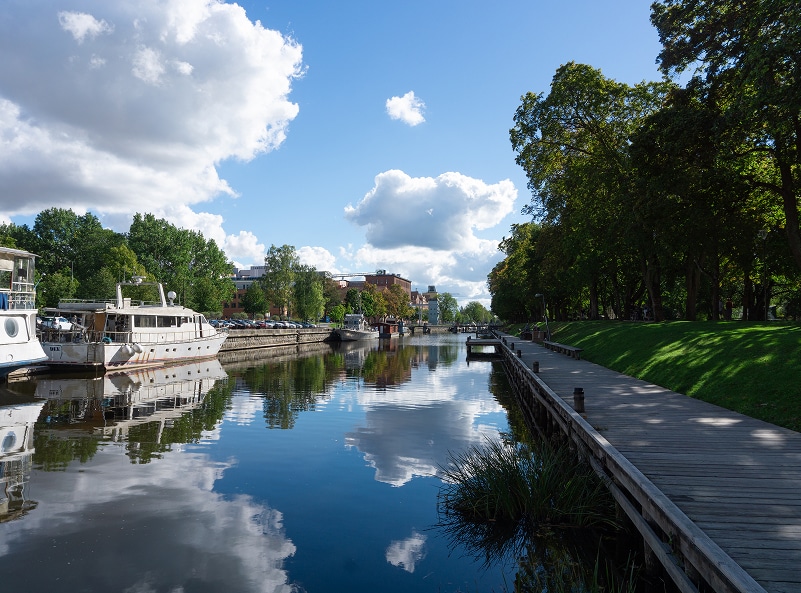
Practical Benefits for Waterfront Owners
Full-length walkways
Walk the entire length of the boat for boarding, cleaning, and service without stepping over beams or squeezing between tight posts.
Adaptable and relocatable
Lift capacity and bunking can be adjusted as your boats change, and the entire unit can be towed behind a vessel or moved by trailer if you relocate.
Less heavy structure
Floating lifts typically require less heavy structure than traditional cable lifts, which can mean a simpler permitting process and less impact to the existing dock.
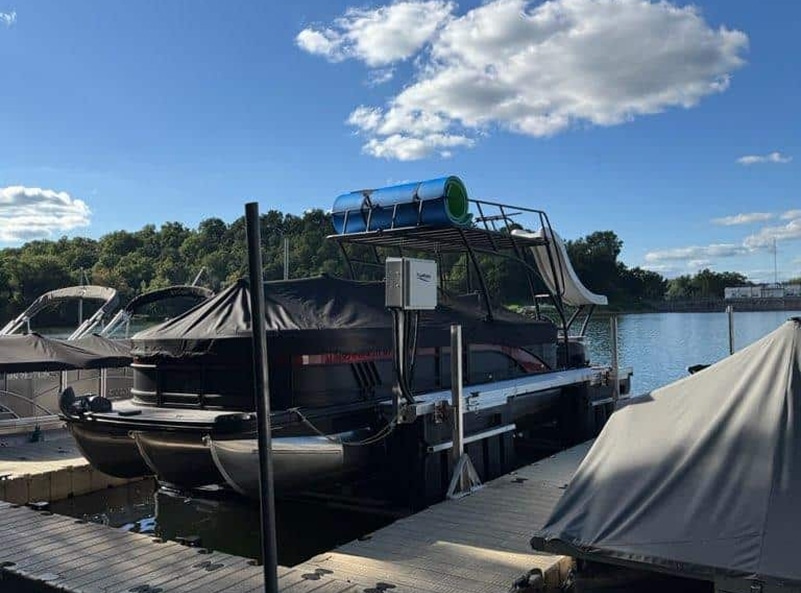
Local Site Review for the Right Setup
Tidewater Boat Lifts evaluates your dock, water depth, and exposure before installation, then matches the lift, capacity, and controls to your specific application.
Most installations need roughly 30 inches of water plus your boat’s draft, although the exact requirement depends on the lift capacity and site conditions.
The local site review helps confirm those requirements before lift sizing and installation are finalized.
Why It Works Here FAQs
A floating boat lift moves with the water level instead of relying on one fixed water line. This makes it well suited to rivers, creeks, and other waterways where levels rise and fall because of tides, rainfall, or seasonal conditions.
Yes. TideRider floating lifts are designed for waterways where water levels can change, including tidal rivers, creeks, marinas, and lakefront properties. The exact setup depends on the dock, water depth, and site conditions.
The lift is adaptable and relocatable. Lift capacity and bunking can be adjusted as boats change, and the unit can be towed behind a vessel or moved by trailer if required.
Tidewater Boat Lifts reviews the dock, water depth, and exposure before finalizing the lift configuration so the capacity, controls, and setup can be matched to the application.